⚡ Quick Summary / Key Takeaway
Heavy rain accelerates termite threats in two ways: (1) Saturated soil forces subterranean worker termites upward into dry masonry cracks and doorframes, and (2) Warm, humid post-rain evenings trigger massive nuptial swarms of winged reproductive termites (alates/isel). To protect your home: switch off white outdoor lights during swarming hours, seal foundation cracks, and maintain a chemical perimeter barrier.
📑 Table of Contents
- • The Core Problem
- • Chennai-Specific Climate Factors
- • Pest Biology & Behavior
- • Real Field Experience / Case Study
- • Practical Prevention Checklist
- • Professional Treatment Protocol
- • Commercial & Builder Considerations
- • Transparent Pricing in Chennai
- • Why Choose Sri Krishna Pest Control
- • Frequently Asked Questions
The Core Problem
Every year across Chennai, the first heavy showers bring swarms of winged insects hovering around streetlights and falling onto living room floors, shedding their wings. Within months, homeowners discover that subterranean termites have invaded their doorframes, modular kitchens, and wooden wardrobes.
Chennai-Specific Expertise & Regional Vulnerability
Chennai's tropical monsoon creates the exact atmospheric cues (falling barometric pressure, soil saturation, and 85%+ relative humidity) that subterranean termite colonies require to release swarmers. Coastal regions along ECR, OMR, and Thiruvanmiyur see heavy swarming events from October through December.
Pest Biology, Habitats & Nesting Patterns
Winged termites (alates, known locally as 'Eesal' in Tamil) are the reproductive kings and queens of mature colonies. After a brief flight, they shed their wings, pair off, and crawl into soil crevices, expansion joints, or damp wooden doorframes to establish new colonies capable of laying 2,000 eggs per day.
🏠 Field Case Study: Chennai Real-World Experience
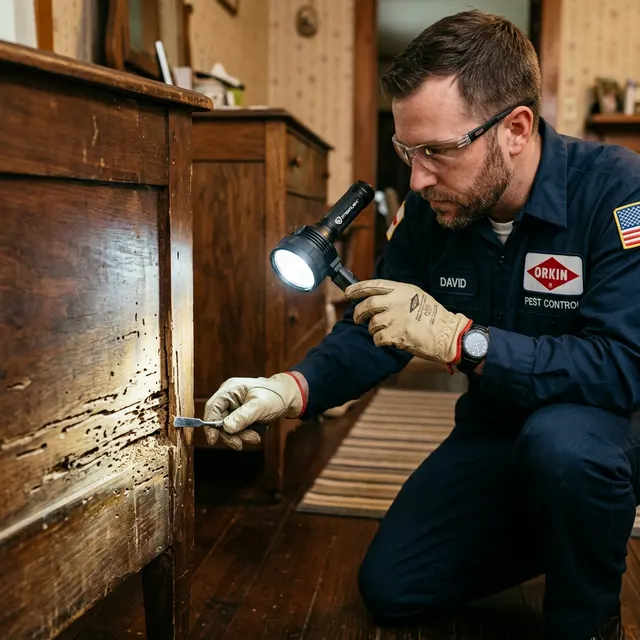
A duplex villa in ECR had dozens of alates enter through terrace door gaps during an October evening storm. The homeowner swept away the wings, assuming the insects died. Six months later, mud tubes erupted through the skirting of the master bedroom. Sri Krishna Pest Control identified a newly established colony behind the wardrobe and executed a complete drill-inject-seal barrier, neutralizing the nest.
Practical Prevention Checklist for Property Owners
Take these proactive, DIY exclusion and sanitation actions to prevent recurring infestations:
- Turn off white exterior porch and balcony lights between 6 PM and 8 PM during rainy evenings; use warm yellow LED lights instead.
- Keep all windows and terrace doors closed during twilight hours when swarms emerge.
- Check window sills and floor corners for shed translucent wings—a definite sign of mating pairs inside.
- Do not allow garden soil or mulch to rise above the building's concrete plinth line.
The Sri Krishna Professional Treatment Protocol
We deploy non-repellent termiticide barriers (Imidacloprid/Fipronil). Foraging termites cannot detect the chemical; they walk through it, transfer the active ingredient to the queen through social grooming (trophallaxis), and eliminate the entire underground colony.
Commercial, Facility & Builder Implications
We work with civil contractors and commercial property owners to perform post-monsoon structural timber and foundation soil barrier reinforcements.
Chennai Pricing Factors & Cost Parameters
Anti-termite barrier protection in Chennai is priced between ₹12 and ₹18 per square foot, backed by a written 5-year guarantee with free annual inspections.
Why Trust Sri Krishna Pest Control Services?
- 15+ Years of Field Excellence: Over 25,000+ satisfied homes, villas, tech parks, and restaurants protected across Tamil Nadu.
- Government Certified: Fully licensed by the Tamil Nadu Department of Agriculture, adhering strictly to CIBRC norms.
- Child & Pet Safe: 100% odourless, non-toxic, eco-friendly green formulations; no need to vacate during treatment.
- Comprehensive Warranty: Written warranty certificates with hassle-free free re-treatments if pests re-emerge.
Frequently Asked Questions
Q: Do winged termites (eesal) eat wood immediately?
A: No. Alates do not eat wood directly; their sole mission is to find a mate, shed wings, and burrow into soil or wood crevices to start a new colony.
Q: If I sweep up dead winged termites, is my house safe?
A: Not necessarily. Finding shed wings inside means reproductive pairs may have successfully hidden beneath floorboards or inside doorframes before dying or mating.
Q: Can termite treatments be done during the rainy season?
A: Indoor drill-and-inject treatments can be done year-round. Exterior soil trenching should only be performed on dry days when soil is not waterlogged to prevent chemical runoff.
🛡 Ready to Eliminate Pests From Your Property?
Schedule your free inspection with our licensed technicians today. Rapid callback within 15 minutes.
📞 Call +91 81485 73149 💬 Chat on WhatsAppRelated Pest Control Services
Serving Neighborhoods Across Chennai
Article Reviewed by R. Loganathan
Certified Entomologist & Technical Director, Sri Krishna Pest Control Services
With over 15 years of specialized field experience in urban pest management, R. Loganathan oversees structural pest barrier design, FSSAI hygiene audits, and CIBRC chemical safety compliance across Chennai, Kanchipuram, and Tiruvallur.
Schedule Your Free Inspection
Protect your home or commercial premises. Fill in your details below for instant confirmation and direct WhatsApp routing.