⚡ Quick Summary / Key Takeaway
Post-monsoon pest control requires a structured 5-step audit: (1) Sun-dry and inspect wooden doorframes and wardrobes for subterranean termite mud lines, (2) Deep-clean and treat all bathroom floor traps with foaming bio-drain cleaners, (3) Clear dry mulch and soil deposits touching exterior walls, (4) Inspect false ceilings and water heaters for hidden rodent nesting, and (5) Seal hairline masonry cracks widened by monsoon rain expansion.
📑 Table of Contents
- • The Core Problem
- • Chennai-Specific Climate Factors
- • Pest Biology & Behavior
- • Real Field Experience / Case Study
- • Practical Prevention Checklist
- • Professional Treatment Protocol
- • Commercial & Builder Considerations
- • Transparent Pricing in Chennai
- • Why Choose Sri Krishna Pest Control
- • Frequently Asked Questions
The Core Problem
When the heavy monsoon rains end in January, homeowners breathe a sigh of relief. However, the residual dampness trapped inside masonry, timber, and drainage shafts sets off a second wave of pest emergencies—especially silent termite damage and rapid cockroach reproduction.
Chennai-Specific Expertise & Regional Vulnerability
Chennai's post-monsoon period transitions from torrential rains into humid warmth. In areas like Porur, Mogappair, and Medavakkam, building foundations that absorbed weeks of floodwater take months to dry out, keeping structural woodwork soft and vulnerable to wood borers and subterranean termites.
Pest Biology, Habitats & Nesting Patterns
Subterranean termites exploit the lingering soil moisture to build rapid mud tube highways up foundations. Concurrently, fungus gnats and silverfish proliferate in damp cupboards, feeding on microscopic mold growing on wallpapers, book bindings, and cotton fabrics.
🏠 Field Case Study: Chennai Real-World Experience
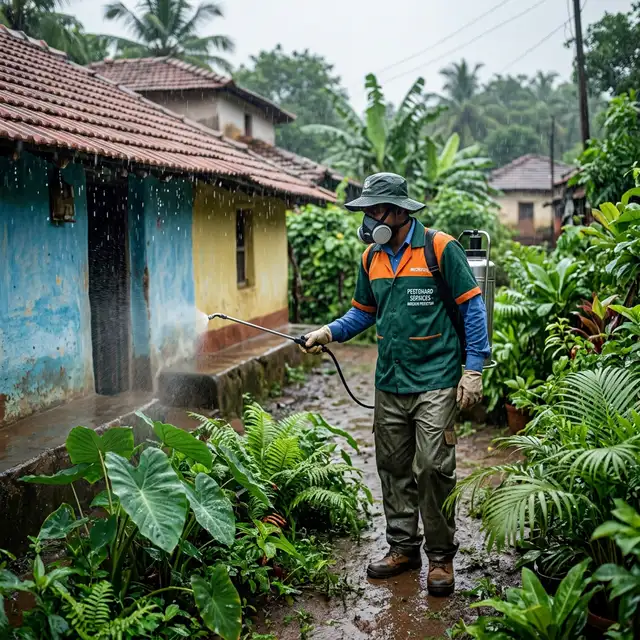
Following the monsoon season, an apartment owner in Mogappair discovered fine wood dust under the study table. Sri Krishna Pest Control identified an early wood-borer and subterranean termite infestation stemming from dampness behind the balcony sliding door. Immediate localized chemical injection arrested the infestation before it reached the living room parquet flooring.
Practical Prevention Checklist for Property Owners
Take these proactive, DIY exclusion and sanitation actions to prevent recurring infestations:
- Open windows and run ceiling fans on sunny post-monsoon days to reduce indoor humidity below 60%.
- Pull wardrobes and large wooden furniture 3 inches away from exterior walls to allow air circulation.
- Check kitchen sink base cabinets for hidden pipe leaks and damp wood swelling.
- Schedule an annual post-monsoon termite and general pest audit.
The Sri Krishna Professional Treatment Protocol
Our Post-Monsoon Recovery Package provides a complete property health check: moisture-mapping of woodwork, drill-inject-seal preventive treatment on foundation perimeters, and non-toxic gel baiting in kitchen cabinetry.
Commercial, Facility & Builder Implications
We assist facility managers and residential welfare associations (RWA) with comprehensive basement, pump room, and STP post-monsoon decontamination.
Chennai Pricing Factors & Cost Parameters
Post-monsoon complete home audits and treatments in Chennai range from ₹2,200 to ₹4,000 for standard apartments.
Why Trust Sri Krishna Pest Control Services?
- 15+ Years of Field Excellence: Over 25,000+ satisfied homes, villas, tech parks, and restaurants protected across Tamil Nadu.
- Government Certified: Fully licensed by the Tamil Nadu Department of Agriculture, adhering strictly to CIBRC norms.
- Child & Pet Safe: 100% odourless, non-toxic, eco-friendly green formulations; no need to vacate during treatment.
- Comprehensive Warranty: Written warranty certificates with hassle-free free re-treatments if pests re-emerge.
Frequently Asked Questions
Q: Why is post-monsoon the best time for termite treatment?
A: Post-monsoon soil is damp and receptive to chemical barrier penetration, and termites are actively foraging near the surface, maximizing treatment efficacy.
Q: What causes tiny silver insects in my book cupboards after rain?
A: These are silverfish (Lepisma saccharinum), primitive wingless insects that thrive in high humidity and feed on carbohydrates, starch, and book glue.
Q: How do I know if my damp wall has termites or just mold?
A: Mold appears as flat black or green powdery stains; termites construct raised, textured earthy mud tubes that crack open when scraped.
🛡 Ready to Eliminate Pests From Your Property?
Schedule your free inspection with our licensed technicians today. Rapid callback within 15 minutes.
📞 Call +91 81485 73149 💬 Chat on WhatsAppRelated Pest Control Services
Serving Neighborhoods Across Chennai
Article Reviewed by R. Loganathan
Certified Entomologist & Technical Director, Sri Krishna Pest Control Services
With over 15 years of specialized field experience in urban pest management, R. Loganathan oversees structural pest barrier design, FSSAI hygiene audits, and CIBRC chemical safety compliance across Chennai, Kanchipuram, and Tiruvallur.
Schedule Your Free Inspection
Protect your home or commercial premises. Fill in your details below for instant confirmation and direct WhatsApp routing.